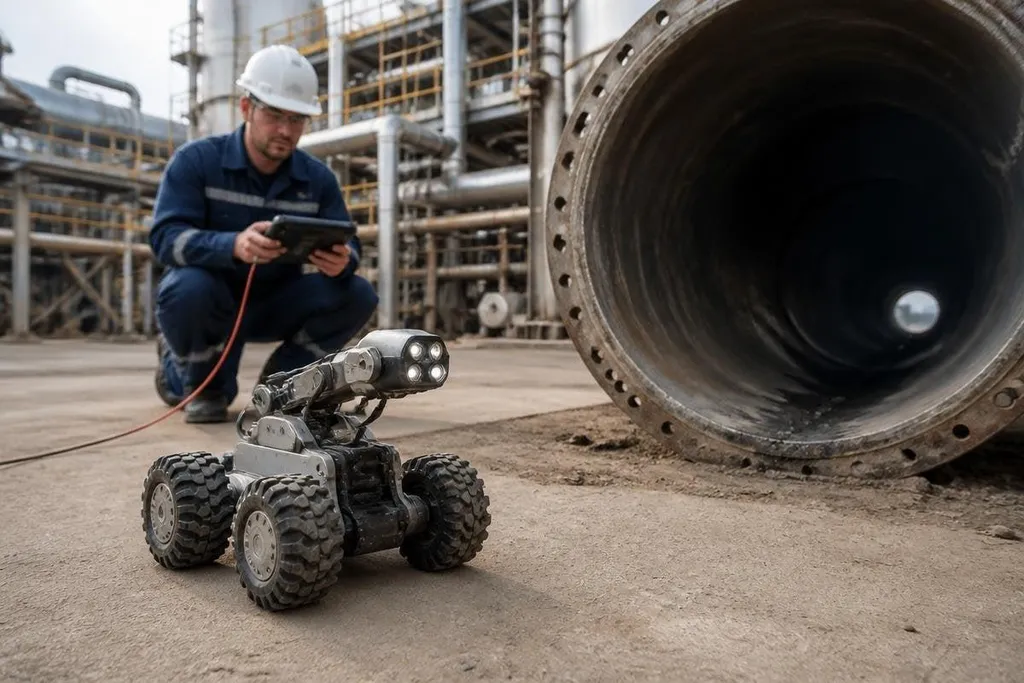
Inspection robots can enter places that are hot, dark, toxic, or unsafe for a person. They can carry cameras and sensors through those areas, but their readings still need a trained person who understands the site and the job.
- Cameras can check pipes, tanks, roofs, tracks, and confined spaces without sending a person inside.
- Thermal, gas, ultrasonic, and LiDAR sensors can find signs that a normal camera misses.
- Poor lighting, dust, weak signals, and sensor limits can turn a useful robot into a costly delay.
Where inspection robots help
A wheeled or tracked robot can move through a plant, tunnel, warehouse, or construction site while sending video back to an operator. A flying robot can check roofs, towers, bridges, and other high areas without a worker climbing first.
That change matters most when the inspection itself creates the danger. A person may need to enter a confined space, work near moving equipment, or climb to a hard-to-reach point. A robot can collect the first set of images and readings from a safer position.
The robot can repeat the same route and record the results in a consistent format. That gives the inspection team a way to compare images from different visits, provided the robot follows the same path and the sensors remain calibrated.
What the robot can measure
A normal camera records visible light. A thermal camera records heat patterns, which can point to an overheated electrical part, a hot bearing, or a difference in surface temperature. The image still needs context because a temperature change can have more than one cause.
Gas sensors can warn about leaks or unsafe air. Ultrasonic sensors can detect sound outside the range of human hearing, including signals linked to leaks or worn parts. LiDAR measures distance with laser pulses, helping a robot build a map and avoid obstacles.
These tools give an inspection team more information before it sends a person to check a fault. They don't remove the need for a close look, a repair plan, or a safety permit.
A robot that finds a hot bearing still needs to work through dust and tight access points. Reports on inspection robots at Robot24.com can show the model, site, test date, and fault it checked before the next section examines where these systems fail.
Where inspection robots fail
A robot can miss a defect when its camera has the wrong angle, its sensor faces dust, or the surface blocks the signal. A machine that works well on a clean floor may struggle on loose gravel, stairs, standing water, or damaged flooring.
Remote control brings another limit. A weak radio link can delay video or stop the robot in the wrong place. A fully autonomous system may also make a poor choice when the site differs from the map used during setup.
False alarms cost time because a person must check each one. Missed faults cost more. The inspection plan should state which findings the robot can report on its own and which findings need human review.
Battery life, charging, cleaning, and repairs add work for the team. The purchase price is only one part of the cost.
You may need new software, staff training, site changes, and a second robot when the first one is charging or being repaired.
Safety and data risks
A moving robot can hit a person, block an exit, or interfere with equipment. The site needs speed limits, marked operating areas, an emergency stop, and a clear rule for who controls the machine when an operator and an automatic system disagree.
Recorded video can show workers, security points, plant layouts, and equipment settings. Store that data with access rules and a retention period that match the inspection task. A camera that records everything may collect more information than the team needs.
I'd start with a narrow inspection route where the current process is slow, dangerous, or hard to repeat. That gives the team a clear test without pretending one robot can cover an entire site.
A buying checklist
Before choosing a system, check these points:
- Name the defect: write down the fault the robot must find and the sensor that can detect it.
- Map the route: record stairs, doors, water, dust, slopes, narrow gaps, and areas with weak radio coverage.
- Set the handoff: decide which findings need a person to review the image or sensor reading.
- Price the full job: include charging, cleaning, training, software, repairs, and data storage.
- Run a repeat test: use the same route on several visits and compare the records for missed areas.
Inspection robots make the most sense where they reduce exposure and produce records people can check. The open question for each site is specific: can the robot find the needed fault often enough to justify its cost and the extra work around it?